On Fairytales, the Healing Power of Imagination, and How I Climbed Down from My Own Tower
I have been thinking about fairytales. In some ways they are almost as important to me as the accounts in Scripture. They hold life and breathe it into my own. One of these moments that keep swirling in my mind is when Rapunzel’s toes first touch grass. I have had a few moments in my life like this, and I am longing for another one. The golden hair maiden has been locked in a tower and she finally seizes an opportunity to leave to follow her dreams. But on her way, that first taste of a new adventure is that delicious feel of grass on her bare feet. Her song continues showing her delight as she feels the grass beneath her feet, the dirt, the breeze in her hair, the brook and the feeling of running in the sunshine. And yet, I don’t think it is those sensations themselves that healed her from the darkness of the tower, it was her imagination.
I keep thinking about this anecdote that Bessel van der Kolk shared in his book, “The Body Keeps the Score”. I keep coming back to this concept the psychiatrist witnessed, even though his conclusions are controversial. During the terror attacks of 9/11 the children that witnessed the event were divided into two camps. The ones that were traumatized and became stuck in that trauma, and the children that imagined a different way. When these children were tasked with drawing about their experience, the ones that could imagine a trampoline, or parachutes for the victims jumping from the World Trade Center to their death to escape the flames, those were the children who healed. They imagined a way to be safe.
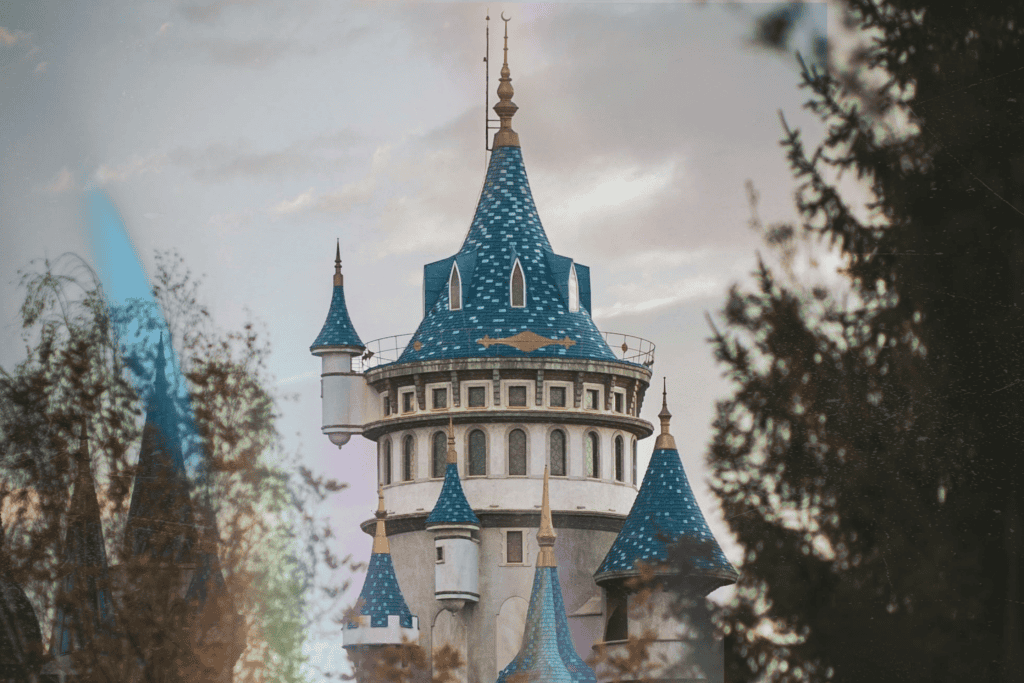
I think there is more of a connection between hearts that need healing and the stories we tell children than our culture acknowledges. While I love any good story, Disney’s adapted fairy tales have captured my heart more than most others. They imagine a way to safety. In the last couple of decades the Disney company has caught criticism on their happily ever afters. And yet, I recall that Dumbo and Pinocchio are tales not for the faint of heart. There was no prince that came along to save them. They had to manage on their own with a friend or two to try to point them in the right direction. How lonely and frightening to be forced to perform in front of a stage set up just to humiliate you, or to be trapped on an island, losing your humanity you haven’t fully gained yet. However, Disney imagined an exit for our protagonists from those humiliating, terrifying and devastating situations. That same imagination can help me to imagine something different for myself. At age nine, or age thirty-nine, that same imagination, creativity and problem solving is the difference between being stuck, or being healed. Though I didn’t witness first hand the terror attack on that fateful autumn day, nor have I ever been trapped inside a whale, I have my own unique experiences that sometimes seem to rise to a similar intensity. We all have some version of those places, be it Pleasure Island, Neverland, the basement of the Magician’s castle, a witch’s house made of candy, a circus tent with mocking onlookers…mine is a tower with no door.
And yes, I do believe fairytales have the power to teach us, young and old, to not forsake one of our most precious gifts: creativity and imagination. After all we are made in the image of God, and He is THE Creator. Isaiah 40:28 says, “Haven’t you known? Haven’t you heard that the everlasting God, ADONAI, the Creator of the ends of the earth, does not grow tired or weary? His understanding cannot be fathomed.” We have the ability to be inspired, invent and problem solve. J. R. R. Tolkien calls this sub-creation. This is the idea that when we make something, we participate in God’s creative nature. It is because we are made in the image of God we have this ability. And it may be that creativity is not just a side quest or a luxury, but an integral part of our humanity. This is part of being an image bearer of the Almighty God. And I think practicing it brings us closer to Him.
As for my story, it looked quite like Rapunzel in her tower. For me this tower was like my own stale picture of my future, including poor health, old perspective and limiting beliefs about myself, and worse, my God. I was locked away, largely my own doing. Creativity, courage and imagination helped me climb down the tower and eventually make many of my dreams come true. I had a lot of help along the way, my own versions of Pascal, Maximus and Eugene Fitzherbert. While the journey is still ongoing, I do believe I will feel safe again. I will keep you posted. After all, God is the Creator of the ends of the earth, so He can give each one of us a happily ever after.
References and Inspirations:
Dumbo. Directed by Ben Sharpsteen, produced by Walt Disney, The Walt Disney Company, 1941.
Gabler, Neal. Walt Disney: The Triumph of the American Imagination. Vintage Books, 2007.
Pinocchio. Directed by Ben Sharpsteen and Hamilton Luske, produced by The Walt Disney Company, 1940.
Tangled. Directed by Nathan Greno and Byron Howard, produced by Walt Disney Animation Studios, 2010.
Tolkien, J. R. R. “On Fairy-Stories.” The Monsters and the Critics and Other Essays, edited by Christopher Tolkien, HarperCollins, 2006, pp. 109–61.
van der Kolk, Bessel. The Body Keeps the Score: Brain, Mind, and Body in the Healing of Trauma. Viking, 2014.